

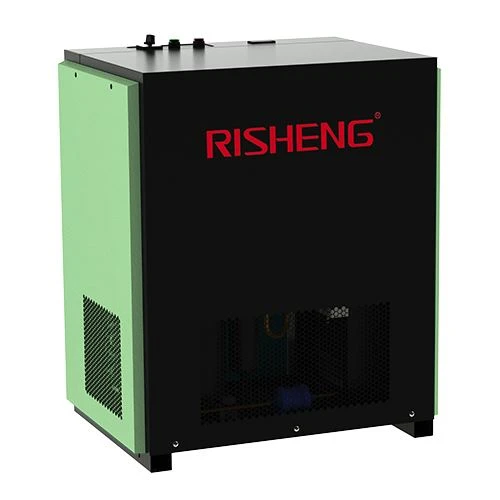
Importance of Compressed Air Dryers:
Refrigeration air dryers work two fold to keep your air equipment efficiently by both cooling and drying the air within your air compressor system. Without an effective refrigeration air dryer, your system is susceptible to long-term damage.
Compressed Air Dryers play a crucial role in addressing these challenges by effectively removing moisture and contaminants from compressed air streams. Here's how they mitigate the aforementioned issues:
Moisture Control: By reducing the dew point of compressed air, dryers prevent condensation and the formation of water droplets that can corrode equipment and degrade product quality.
Equipment Protection: Dry air extends the lifespan of pneumatic tools and machinery by minimizing rust and corrosion, thus reducing maintenance costs and downtime.
Product Quality: Dry air ensures consistent product quality in manufacturing processes sensitive to moisture, such as food and beverage production, electronics manufacturing, and pharmaceuticals.
Energy Efficiency: Dry air enhances the efficiency of compressed air systems by preventing energy losses due to water vapor, which can reduce the effectiveness of air-operated tools and equipment.
Environmental Impact: By reducing the need for frequent maintenance and replacement of damaged equipment, dryers contribute to sustainability efforts and reduce overall environmental footprint.
Types of Compressed Air Dryers:
Refrigerated Air Dryers: Utilize cooling technology to condense moisture from compressed air, effective for general industrial applications.
Desiccant Air Dryers: Use adsorption or absorption materials like silica gel to remove moisture, suitable for low dew point requirements and critical applications.
Membrane Air Dryers: Employ semi-permeable membranes to selectively remove water vapor from compressed air, ideal for small-scale applications or where energy efficiency is paramount.


