

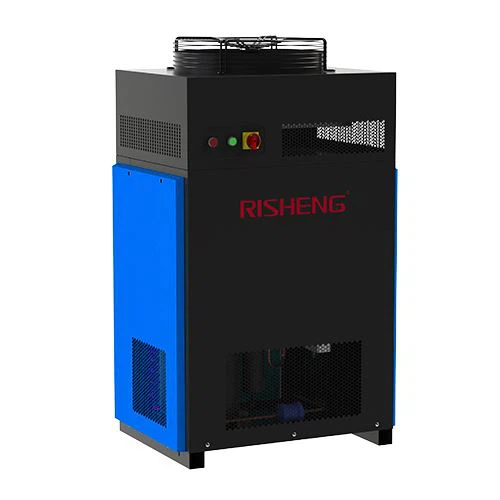
Features of a High-Temperature Air Dryer
Temperature Control: High-temperature air dryers are equipped with precise temperature control systems, allowing operators to set and maintain the desired drying temperature. This feature is crucial for drying different materials with varying moisture content and thermal sensitivity.
Robust Construction: These dryers are built to withstand high temperatures and continuous operation. They are typically made from durable materials such as stainless steel or high-grade alloys to resist corrosion and wear.
Automated Operation: Many high-temperature air dryers feature automated control systems that monitor and adjust the drying process in real-time. This automation improves efficiency, reduces labor costs, and minimizes the risk of human error.
Safety Features: Given the high operating temperatures, these dryers are designed with multiple safety features, including over-temperature protection, emergency shutoff systems, and insulation to prevent heat loss and ensure safe operation.
Customizable Design: High-temperature air dryers can be customized to meet specific process requirements. Options include varying sizes, configurations (e.g., batch or continuous), and additional features such as dehumidification, filtration, or cooling zones.
Low Maintenance: These dryers are designed for reliability and low maintenance, with easily accessible components and self-cleaning options that reduce downtime and ensure continuous operation.
1. Working Principle of a High-Temperature Air Dryer
The primary function of a high-temperature air dryer is to remove moisture from materials by passing hot air through them. The basic working principle can be broken down into several key steps:
Air Heating: The process begins with the heating of air to a specified high temperature, typically ranging from 150°C to 450°C, depending on the specific application. The air is heated using electric heaters, gas burners, or steam coils, depending on the design of the dryer.
Air Distribution: The heated air is then evenly distributed across the material that needs to be dried. This distribution is usually achieved through a system of ducts and fans that ensure uniform airflow across the drying chamber or conveyor belt.
Moisture Evaporation: As the hot air passes over the material, it absorbs moisture from the surface and interior of the material. The heat energy in the air causes the water molecules in the material to evaporate, turning into vapor, which is then carried away by the moving air.
Exhaust and Moisture Removal: The moisture-laden air is then exhausted from the dryer. In some systems, the air may be recirculated and reheated to improve energy efficiency. In others, the moist air is vented out, and fresh air is introduced to continue the drying process.
Material Handling: The dried material is typically conveyed out of the dryer using a belt or screw conveyor. In batch processes, the material is removed after the drying cycle is complete.
2. Advantages of a High-Temperature Air Dryer
Efficient Moisture Removal: High-temperature air dryers are highly efficient at removing moisture from materials, even at high throughput rates. The elevated temperature increases the rate of moisture evaporation, resulting in faster drying times.
Versatility: These dryers are versatile and can be used for a wide range of materials, including powders, granules, pastes, and solid products. They are also suitable for drying heat-sensitive materials by adjusting the temperature settings accordingly.
Energy Efficiency: Many high-temperature air dryers are designed with energy-saving features, such as air recirculation systems, which reuse the hot air to reduce energy consumption. This leads to lower operating costs and improved sustainability.
Consistent Drying: The even distribution of hot air ensures that materials are dried uniformly, reducing the risk of over-drying or under-drying. This consistency is crucial for maintaining the quality of the final product.
High Throughput: High-temperature air dryers can handle large volumes of material, making them ideal for industrial-scale operations. Their design allows for continuous operation, which is essential for processes that require uninterrupted production.
| Parameter | Specification |
| Capacity | 1~15 m³/min |
| Max. Working Pressure | ≤1.5 MPa (15 barg) |
| Max. Inlet Temperature | 80°C |
| Max. Ambient Temperature | 50°C |
| Min. Ambient Temperature | 5°C |
| Max. Cooling Water Temperature | 35°C |
| Cooling Type | Air-cooled / Water-cooled |
| Power Supply | 220V/1Ph/50Hz/60Hz |
| Refrigerant | R134a / R407C |
| Rated Condition | |
| - Rated Working Pressure | 0.7 MPa |
| - Inlet Temperature | 60°C |
| - Ambient Temperature | 38°C |
| - Cooling Water Temperature | 32°C |
| - Pressure Dew Point (PDP) | 3-10°C |
| Other Notes | For pressure < 0.4 MPa or > 1.5 MPa, please contact us. |
Technical Specification
| Model | Air Connection | Capacity m³/min | Power Supply | Absorbed | Dimension mm | Weight | |||
| Power (kW) | |||||||||
| m³/min | CFM | V/Ph/Hz | L | W | H | kg | |||
| RSLF-12-HT | Rc1/2" | 1.2 | 42 | 230/1/50 | 0.3 | 650 | 320 | 550 | 35 |
| RSLF-24-HT | Rc1" | 2.4 | 85 | 230/1/50 | 0.61 | 800 | 420 | 600 | 70 |
| RSLF-30-HT | Rc1" | 3 | 106 | 230/1/50 | 0.76 | 800 | 420 | 600 | 75 |
| RSLF-60-HT | Rc1-1/2" | 6 | 212 | 230/1/50 | 1.09 | 750 | 695 | 1260 | 125 |
| RSLF-80-HT | Rc1-1/2" | 8 | 282 | 230/1/50 | 1.45 | 750 | 695 | 1260 | 128 |
| RSLF-100-HT | Rc1-1/2" | 10 | 353 | 230/1/50 | 1.82 | 750 | 695 | 1260 | 133 |
| RSLF-120-HT | Rc2" | 12 | 424 | 230/1/50 | 2.18 | 1000 | 840 | 1450 | 165 |
| RSLF-150-HT | Rc2" | 15 | 530 | 230/1/50 | 2.73 | 1000 | 840 | 1450 | 175 |
|
Rated Conditions |
|
|
Working pressure : 0.7MPag / 100psig |
|
|
Inlet temp : 60 ℃ / 140 ℉ |
|
|
Ambient temp : 38℃ / 100 ℉ |
|
|
Working Range |
|
|
Max. working pressure : 1.5MPag / 218psig |
|
|
Max. inlet temperature : 80 ℃ / 176 ℉ |
|
|
Max. ambient temperature : 50℃ / 122 ℉ |
|
|
Min. ambient temperature : 5℃ / 41 ℉ |
|
|
Avaliable |
|
|
Higher working pressure |
|
|
Different power supply |
|
|
Timed drain or zero loss drain |
|
|
Higher Capacity |

Correction Factors
Actual Capacity (m³/min) = Nominal Capacity × KA × KB × KC
| Working Pressure (KA) | Mpag | 0.4 | 0.5 | 0.6 | 0.7 | 0.8 | 0.9 |
| psig | 58 | 73 | 87 | 102 | 116 | 131 | |
| CFP | 0.86 | 0.92 | 0.93 | 1 | 1.04 | 1.08 | |
| Mpag | 1 | 1.1 | 1.2 | 1.3 | 1.4 | 1.5 | |
| psig | 145 | 160 | 174 | 189 | 203 | 218 | |
| CFP | 1.11 | 1.15 | 1.18 | 1.22 | 1.25 | 1.28 |
| Inlet Temperature (KB) | ℃ | 50 | 55 | 60 | 65 | 70 | 75 | 80 |
| ℉ | 122 | 131 | 140 | 149 | 158 | 167 | 176 | |
| CFT | 1.03 | 1.02 | 1 | 0.87 | 0.78 | 0.7 | 0.64 |
| Ambient Temperature (KC) | ℃ | 25 | 30 | 35 | 38 | 40 | 45 | 50 |
| ℉ | 77 | 86 | 95 | 100 | 104 | 113 | 122 | |
| CFT | 1.15 | 1.1 | 1.02 | 1 | 0.89 | 0.79 | 0.69 |
FAQ:
1. How does the precise temperature control system benefit the drying process in high-temperature air dryers?
The precise temperature control system in high-temperature air dryers allows operators to maintain the exact drying temperature required for different materials. This feature ensures optimal drying by accommodating varying moisture content and thermal sensitivity, preventing damage to heat-sensitive materials and improving overall drying efficiency.
2. What materials are typically used in the construction of high-temperature air dryers, and why?
High-temperature air dryers are usually constructed from durable materials like stainless steel or high-grade alloys. These materials are chosen for their ability to resist corrosion, wear, and deformation under high temperatures, ensuring the dryer's longevity and reliability in demanding industrial environments.
3. How does automated operation in high-temperature air dryers enhance efficiency?
Automated operation in high-temperature air dryers enables real-time monitoring and adjustments of the drying process, reducing the need for manual intervention. This automation improves process efficiency, minimizes labor costs, and reduces the likelihood of human error, resulting in consistent product quality and increased productivity.
4. What safety features are commonly found in high-temperature air dryers?
High-temperature air dryers are equipped with several safety features, including over-temperature protection, emergency shutoff systems, and thermal insulation. These features prevent overheating, ensure safe operation, and protect both the equipment and operators from potential hazards associated with high-temperature processes.
5. How can high-temperature air dryers be customized to meet specific industrial requirements?
High-temperature air dryers can be customized in terms of size, configuration (batch or continuous), and additional features such as dehumidification, filtration, or cooling zones. This customization allows the dryer to be tailored to specific industrial processes, ensuring optimal performance and compatibility with various production needs.
6. Why is low maintenance important for high-temperature air dryers, and how is it achieved?
Low maintenance is crucial for high-temperature air dryers to ensure continuous operation and minimize downtime. This is achieved through the use of reliable components, easy access for cleaning and repairs, and features like self-cleaning systems that reduce the frequency of maintenance, improving overall operational efficiency.
7. In what scenarios would a high-temperature air dryer's robust construction be particularly beneficial?
The robust construction of high-temperature air dryers is particularly beneficial in harsh industrial environments where the equipment is exposed to continuous high temperatures, corrosive materials, or heavy usage. This durability ensures that the dryer can withstand demanding conditions without compromising performance or lifespan.


