


Working Principle
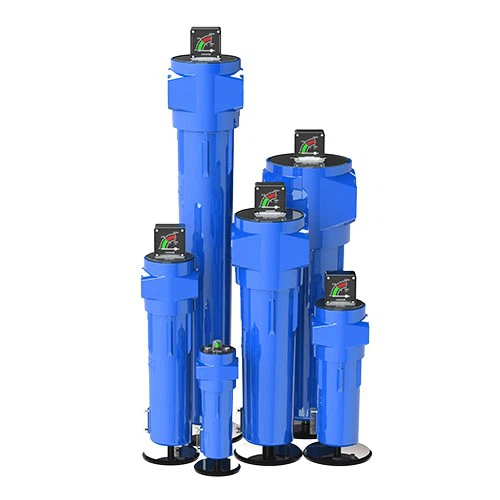
The compressed air particulate filter operates by allowing the compressed air to pass through a specialized filtering medium that traps solid particles. The filtration medium is designed with pores of varying sizes, ensuring that particles of different diameters are captured. As the air passes through the filter, contaminants such as dirt, rust, and scale are removed, leaving clean, particulate-free air.
Air Intake: Compressed air enters the filter housing where it is directed toward the filtration element. The element consists of materials such as pleated synthetic fibers or mesh, which are highly effective in capturing particulates.
Filtration Process: As the air flows through the filter media, solid particles become trapped in the filter's layers. The media is typically designed to capture even the smallest particles, down to 1 micron or less, ensuring highly purified air.
Clean Air Output: Once the particulates are trapped, the filtered air exits the unit. This clean, filtered air is then sent downstream for use in sensitive applications, such as pneumatic equipment, precision manufacturing, or in environments that require high air purity standards.
Drainage System: Some particulate filters are equipped with automatic or manual drainage systems to remove accumulated condensates, ensuring efficient filter operation and extending its lifespan.

Products Certificate

why choose us?
The Compressed Air Particulate Filter is a critical component in industrial processes where air purity and equipment protection are paramount. To ensure it consistently delivers optimal performance, the filter is engineered in accordance with stringent international standards. It often complies with ISO 8573-1, which classifies compressed air quality into specific purity classes, ensuring the filter can effectively remove particles down to a specified size, often as small as 1 micron or less. Additionally, certifications from bodies such as ASME (American Society of Mechanical Engineers) or CE (Conformité Européenne) guarantee that the filter meets safety and performance standards for pressure vessels and related equipment.
These certifications ensure the filter can be trusted for use in a wide range of industries, including pharmaceuticals, food and beverage, automotive manufacturing, and electronics, where clean air is critical to maintaining product quality, reducing downtime, and preventing costly equipment damage. The certified design not only enhances the filter's durability and operational longevity but also reassures businesses that the product adheres to rigorous quality assurance processes. This commitment to safety, reliability, and efficiency ensures that the Compressed Air Filter can meet the demanding needs of industrial applications, even in harsh operating conditions.
one-stop solution
professional team
high quality
FAQ
1.What is the purpose of a compressed air filter?
The primary purpose of a compressed air filter is to remove solid contaminants like dust, dirt, and rust from the compressed air stream. This ensures that the air used in industrial processes is clean, protecting equipment and improving product quality.
2. How often should a compressed air filter be replaced?
The replacement frequency depends on the operating environment and the amount of particulate matter in the air. Filters with indicator systems will alert users when a replacement is needed. However, regular inspection and maintenance should be performed to prevent pressure drop or inefficiency.
3. Can a particulate filter remove oil and water from compressed air?
While a particulate filter is primarily designed to remove solid particles, some filters can also help trap small amounts of oil mist. However, to remove water and oil more effectively, a coalescing filter or oil separator is typically required in combination with the particulate filter.
4. What size of particles can a compressed air filter remove?
Most high-quality particulate filters can remove particles as small as 1 micron or less. Filters are available in different grades depending on the specific requirements of the application, with finer filters being used in highly sensitive environments.
5. What happens if the particulate filter is not maintained properly?
If not maintained, the filter can become clogged, leading to reduced air flow, pressure drops, and decreased filtration efficiency. This could result in contaminated air reaching downstream equipment, causing damage and potentially leading to costly repairs or production downtime.


