


Regeneration Micro-heat Adsorption Dryer Wholesaler
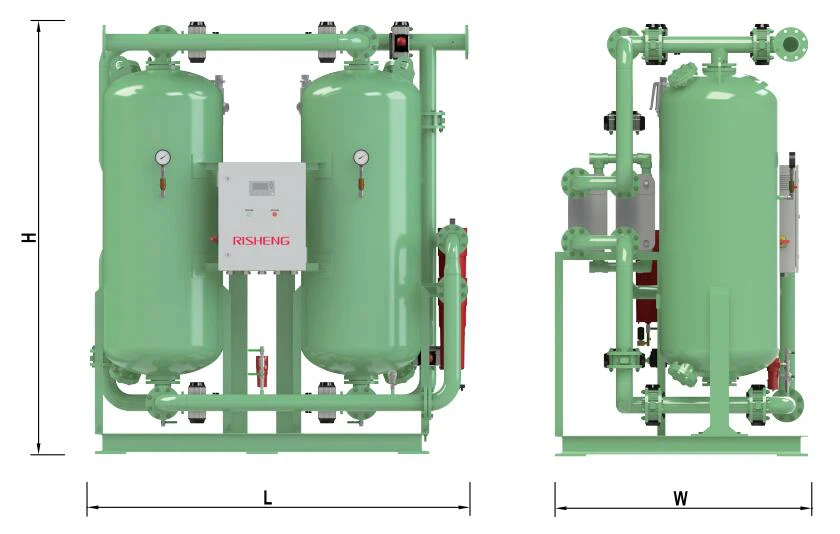
Solenoid valve: multi-point control, reliable operation, super durable, ensure the normal operation of the cylinder adsorption
Distribution box: Optimized controller, the core part adopts the optimal controller, durable, easy to maintain
Can operate stably for a long time
Adsorption cylinder: High pressure resistance, stable high pressure, design pressure 1.0Mpa, high pressure resistance 1.3Mpa
Air control filter: sensitive and efficient, sensitive and powerful air control filter to ensure gas drying effect
|
Rated Conditions |
Working Range |
Avaliable |
 |
|
Working pressure : 0.7MPag / 100psig |
Max.working pressure : 1.0MPag / 145psig |
Higher pressure above 1.0Mpag / 145psig |
|
|
Inlet temp : 160 ℃ / 320 ℉ |
Max.inlet temp : 200℃ / 394 ℉ |
Booster heater |
|
|
Cooling water temp : 32℃ / 90 ℉ |
Max.ambient temperature : 40℃ / 104 ℉ |
Higher capacity |
|
|
Stainless steel vessel or piping |
|||
|
GB,ASME,PED,etc. vessels |
|||
|
Zero loss drain |
FAQ:
1.What is the principle behind the operation of a regenerative desiccant compressed air dryer?
The principle behind regenerative desiccant dryers involves the use of two desiccant towers. One tower adsorbs moisture while the other undergoes regeneration, ensuring a continuous supply of dry air. Regeneration is achieved through heat or pressure reduction, allowing the desiccant to release the accumulated moisture.
2.What are the main advantages of using a regenerative desiccant air dryer?
The primary advantages include the ability to achieve very low dew points, which is crucial for industries that require extremely dry air. Additionally, these dryers are highly energy-efficient, have a long operational lifespan, and offer consistent performance even in varying environmental conditions.
3.In what industries is a regenerative desiccant dryer most commonly used?
Regenerative desiccant dryers are most commonly used in industries such as pharmaceuticals, food and beverage, electronics, and automotive manufacturing. They are especially useful in applications where compressed air needs to meet stringent quality standards, including low dew points and high purity.
4.How does the regeneration cycle of the desiccant work?
The regeneration cycle involves heating or reducing the pressure of the desiccant in one tower, causing it to release the trapped moisture. The moisture is then vented or expelled from the system. Once regeneration is complete, the cycle switches to the second tower, ensuring uninterrupted air drying.
5.What types of desiccants are used in regenerative dryers?
The most common desiccants used are silica gel, activated alumina, and molecular sieve. Each type has specific advantages, such as silica gel for moisture removal at moderate temperatures or molecular sieves for removing water vapor at extremely low temperatures.
6.How do regenerative desiccant dryers help with energy efficiency?
These dryers help improve energy efficiency by utilizing heat or pressure swing regeneration, which can be powered by the compressed air system itself. This means that minimal external energy is required for regeneration, reducing operational costs and improving the overall efficiency of the system.
7.What maintenance is required for a regenerative desiccant dryer?
Regular maintenance includes inspecting the desiccant material for wear or contamination, ensuring the regeneration cycle operates efficiently, and replacing desiccant material as needed. Additionally, it's important to check for leaks, clean filters, and monitor the system's pressure levels to maintain optimal performance.


