


Benefits of Industrial Compressors
Efficiency and Reliability: Industrial compressors are designed to operate efficiently and reliably, ensuring minimal downtime and maximum productivity. Advanced technologies, such as variable speed drives (VSD) and energy-efficient motors, help reduce energy consumption and operational costs.
Customization: They can be customized to meet specific requirements, including the need for oil-free air, specific pressure ranges, and specialized cooling systems. This flexibility allows industries to choose the right compressor for their unique applications.
Durability: Built to withstand harsh industrial environments, these compressors are made from high-quality materials and components, ensuring long service life and minimal maintenance. Regular maintenance schedules and the availability of spare parts also contribute to their durability.
Safety and Compliance: They are designed with safety features such as pressure relief valves, temperature sensors, and automated controls to prevent accidents and ensure safe operation. Additionally, they comply with industry standards and regulations, ensuring that they meet the necessary safety and performance requirements.
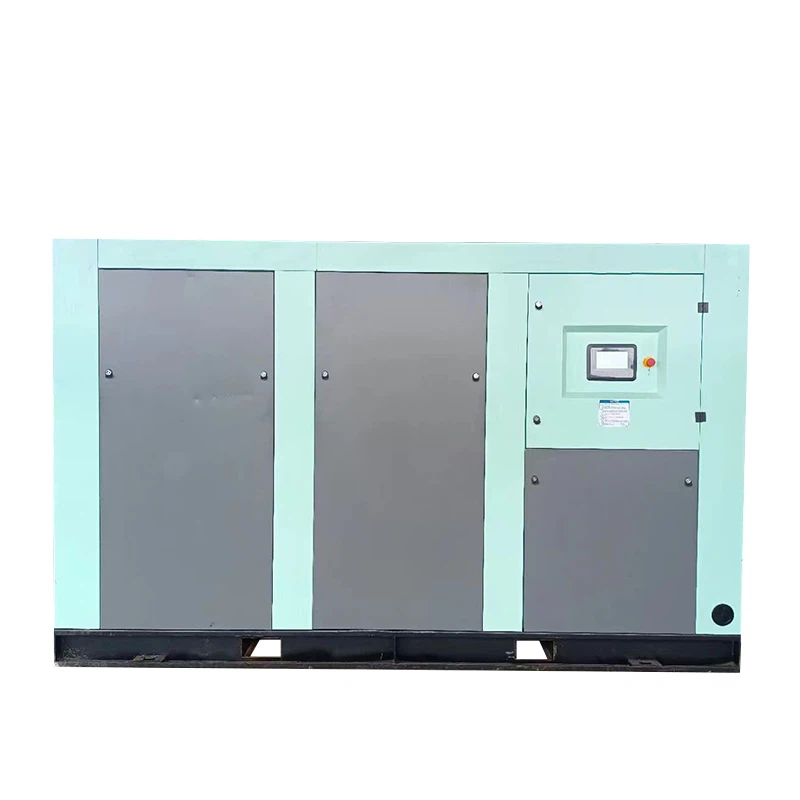
Applications:
Manufacturing: Compressed air is essential for operating machinery, conveying materials, and providing energy for various manufacturing processes.
Automotive: In the automotive industry, compressors are used for painting, assembling, and operating pneumatic tools. They are also used in tire inflation, air conditioning systems, and engine testing.
Oil and Gas: The oil and gas industry relies heavily on compressors for gas processing, pipeline transportation, and offshore drilling.
Food and Beverage: In the food and beverage industry, compressors are used to maintain hygiene standards by providing clean, oil-free air for packaging, bottling, and food processing. They are also used in refrigeration and cooling systems.
Pharmaceuticals: In the pharmaceutical industry, compressed air is used in various stages of production, including mixing, granulation, drying, and packaging.
high
quality
Advanced
Equipment
Professional
Team
One-Stop
Solution
high quality
advanced equipment
professional team
global shipping
FAQ:
1. How are compressors utilized in manufacturing plants?
In manufacturing plants, compressors play a crucial role by powering pneumatic tools, control systems, and various production equipment. Compressed air is essential for operating machinery, conveying materials, and providing the necessary energy for different manufacturing processes, ensuring smooth and efficient production.
2. What role do compressors play in the automotive industry?
In the automotive industry, compressors are essential for tasks such as painting, assembling, and operating pneumatic tools. They are also used in tire inflation, air conditioning systems, and engine testing, making them vital for both production and maintenance activities in the automotive sector.
3. Why are compressors important in the oil and gas industry?
Compressors are vital in the oil and gas industry for gas processing, pipeline transportation, and offshore drilling. They are used to compress natural gas for transportation and storage, and they power pneumatic equipment used in drilling operations, making them indispensable for energy production and distribution.
4. How do compressors contribute to maintaining hygiene standards in the food and beverage industry?
In the food and beverage industry, compressors provide clean, oil-free air that is crucial for packaging, bottling, and food processing. They also play a key role in refrigeration and cooling systems, helping to maintain hygiene standards and ensure the quality and safety of food products.
5. What is the significance of compressed air in the pharmaceutical industry?
In the pharmaceutical industry, compressed air is critical during various production stages, including mixing, granulation, drying, and packaging. The air must be free of contaminants to ensure product quality and safety, making reliable and high-quality compressors essential for maintaining the integrity of pharmaceutical products.


