


What is Heatless Adsorption Air Dryer
The adsorption compressed air dryer uses the principle of pressure swing adsorption. When the wet air passes through the adsorbent, the moisture is absorbed by the adsorbent to obtain dry air.
Benefits of Heatless Adsorption Air Dryer
Enhancing efficiency and productivity
By removing moisture effectively, adsorption air dryers keep your systems running smoothly, preventing downtime and boosting overall productivity. This efficiency is at the heart of what we do at Red River LLC, where we continuously seek ways to improve our processes and products, ensuring they contribute positively to your operations.
Protecting equipment from moisture damage
Moisture can be a formidable enemy of pressure vessels and other critical equipment, leading to corrosion, wear, and premature failure. Our adsorption air dryers offer a robust defense, extending the lifespan of your assets and safeguarding your investment. This protection is a reflection of our dedication to quality and our commitment to ensuring the safety and reliability of your operations.
Improving product quality
The quality of your end products can be significantly impacted by the presence of moisture during production processes. By integrating adsorption air dryers into your operations, you ensure that the final product meets the highest standards of quality, reflecting well on your brand and satisfying your customers' expectations.

Zero Loss Heat Of Compression Desiccant Dryer
Capacity range : 6~600 m3/min
Pressure range : 0.4~1.0MPa (4~10barg)
Min. inlet temperature : 180 ℃ (for screw compressor) 110℃ (for centrifugal compressor)
Max. cooling water temperature : 35 ℃
Power supply : 220V/1Ph/50Hz (standard)
380V/3Ph/50Hz (add additional heating device)
Work cycle : 8h
PDP : -20 ℃ , -40 ℃
Rated condition:
Working pressure : 0.7Mpa
Inlet temperature : 120 ℃
PDP : -40℃ (for screw compressor) -20℃ (for centrifugal compressor)
Cooling water temperature : 32 ℃
Other :
For high pressure type ≥ 1.0Mpa and high inlet temperature type > 140 ℃ can be customized.

Heated Blower Zero Loss Adsorption Dryer
Capacity range : 18~200 m3/min
Pressure range : 0.5~1.0Mpa(4~10barg)
Max. inlet temperature : 45 ℃
Max. condition for blower suction : 40 ℃ (RH=65%)
Power supply : 380V/3Ph/50Hz
Work cycle : 8h
Pressure dew point : -20 ℃ , -40 ℃ , - 70℃
Rated condition :
Working pressure : 0.7Mpa
Cooling water temperature: 32℃
Inlet temperature : 38 ℃
PDP : -40 ℃
Other :
Inlet required for blower suction:38℃(RH=65%)
Please contact us for higher flow and operating pressure.

Heated Blower Adsorption Air Dryer
Capacity range : 40~500 m3/min
Pressure range : 0.4~1.0MPa (4~10barg)
Min. inlet temperature : 105 ℃
Max. cooling water temperature : 35 ℃
Power supply : 220V/1Ph/50Hz (standard)
380V/3Ph/50Hz (add additional heating device)
Work cycle : 8h
PDP : -20 ℃ , -40 ℃
Rated condition:
Working pressure : 0.7Mpa
Inlet temperature : 120 ℃
PDP : -20℃
Cooling water temperature : 30 ℃
Purge air loss : ≤ 1%
Other :
For high pressure type ≥ 1.0Mpa and high inlet
temperature type > 140 ℃ is available for custom-made.

External Heated Adsorption Air Dryer
Capacity range : 6~200 m3/min
Pressure range : 0.4~1.0Mpa(4~10barg)
Max. inlet temperature : 43 ℃
Max. condition for blower suction : 40 ℃ (RH=65%)
Power supply : 380V/3Ph/50Hz
Work cycle : 8h
Pressure dew point : -20 ℃ , -40 ℃ , - 70℃
Rated condition :
Working pressure : 0.7Mpa
Inlet temperature : 38 ℃
Ambient temperature : 38 ℃
PDP : -20 ℃
Other :
Inlet required for blower suction:38℃(RH=65%)
For high pressure type ≥ 1.0Mpa is available for custom-made.

Heatless Modular Adsorption Air Dryer (Tbc)
Capacity range : 3~500 m3/min
Pressure range : 0.4~1.0MPa (4~10barg)
Max. inlet temperature : 43 ℃
Max. ambient temperature : 45 ℃
Power supply : 220V/1Ph/50Hz
PDP : -20 ℃ , -40 ℃ , -70 ℃
Rated condition :
Working pressure : 0.7Mpa
Inlet temperature : 38 ℃
Ambient temperature : 38 ℃
PDP : -20 ℃
Other :
Regeneration air consumption < 7%.

Capacity range : 2~200 m3/min
Pressure range : 0.4~1.0MPa (4~10barg)
Max. inlet temperature : 50 ℃
Max. ambient temperature : 45 ℃
Power supply : 220V/1Ph/50Hz or 60Hz
PDP : -20 ℃ , -40 ℃ , -70 ℃
Rated condition :
Working pressure : 0.7Mpa
Inlet temperature : 38 ℃
Ambient temperature : 38 ℃
PDP : -20 ℃
Other :
Regeneration air consumption < 14%.

Capacity range : 10~350 m3/min
Pressure range : 0.4~ 1.0MPa (4~ 10barg)
Max. inlet temperature : 50 ℃
Max. ambient temperature : 45 ℃
Min. ambient temperature : 5 ℃
Max. cooling water temperature : 35 ℃
Cooling type : Air-cooled / water-cooled
Power supply : 220V/1Ph/ 50Hz ( RSC*- 100 ~ RSC*- 150)
380V/ 3Ph/ 50Hz ( RSC*-200 ~ RSC*-3500)
Refrigerant : R407C (R22 is optional)
PDP : -40℃ , -70℃
Rated condition:
Working pressure : 0.7MPa
Inlet temperature : 38 ℃
Ambient temperature : 38 ℃
PDP : - 40 ℃
Cooling water temperature : 30 ℃
Purge air loss : < 3 %
Other :
For pressure above 1.0MPa please contact us.
Why Choose Us
High quality products
We always put customer needs and expectations in the first place, refine on, continuous improvement, to seek every opportunity to do better, to provide customers with their expectations of quality products, to provide customers with the most satisfactory service at anytime.
Professional team
We have a team of skilled and experienced professionals who are well-versed in the latest technology and industry standards. Our team is dedicated to ensuring that our customers get the best service and support possible.
Customer satisfaction
Providing after-sales services can enhance customer satisfaction by ensuring that customers' needs are met even after the purchase. This can lead to increased customer loyalty and positive word-of-mouth referrals.
Advanced equipment
We take strong measures to ensure that we use the highest quality equipment in the industry and that our equipment is regularly and meticulously maintained.
Competitive prices
We offer our products at competitive prices, making them affordable for our customers. We believe that high-quality products should not come at a premium, and we strive to make our products accessible to all.
Rich experience
Has a long-standing reputation in the industry, which makes it stand out from its competitors. With over many years of experience, they have developed the skills necessary to meet their clients' needs.
Adsorption air dryers and refrigerated air dryers serve the same primary function-to remove moisture from the air, but they operate on fundamentally different principles. Adsorption air dryers use desiccant materials to physically adsorb moisture from the air, making them highly effective even at very low dew points. In contrast, refrigerated air dryers cool the air to condense out moisture, which is then drained away. This method is generally more energy-efficient but less effective at achieving extremely low dew points compared to adsorption dryers.
The Adsorption Dryer Market size is expected to develop revenue and exponential market growth at a remarkable CAGR during the forecast period from 2023–2030. The growth of the market can be attributed to the increasing demand for Adsorption Dryer owning to the Mechanical Engineering, Automotive, Aeronautics, Marine, Oil And Gas, Chemical Industrial, Medical, Electrical Applications across the global level. The report provides insights regarding the lucrative opportunities in the Air Adsorption Dryer Market at the country level. The report also includes a precise cost, segments, trends, region, and commercial development of the major key players globally for the projected period.
The Adsorption Dryer Market report represents gathered information about a market within an industry or various industries. The Adsorption Dryer Market report includes analysis in terms of both quantitative and qualitative data with a forecast period of the report extending from 2023 to 2030. The report is prepared to take into consideration various factors such as Product pricing, Product or services penetration at both country and regional levels, Country GDP, market dynamics of parent market & child markets, End application industries, major players, consumer buying behavior, economic, political, social scenarios of countries, many others. The report is divided into various segments to offer a detailed analysis of the market from every possible aspect of the market.
The overall report focuses on primary sections such as – market segments, market outlook, competitive landscape, and company profiles. The segments provide details in terms of various perspectives such as end-use industry, product or service type, and any other relevant segmentation as per the market' s current scenario which includes various aspects to perform further marketing activity. The market outlook section gives a detailed analysis of market evolution, growth drivers, restraints, opportunities, and challenges, Porter' s 5 Force' s Framework, macroeconomic analysis, value chain analysis and pricing analysis that directly shape the market at present and over the forecasted period. The drivers and restraints cover the internal factors of the market whereas opportunities and challenges are the external factors that are affecting the market. The market outlook section also gives an indication of the trends influencing new business development and investment opportunities.
How to Choose the Right Air Dryer
Choosing the right air dryer will increase system efficiency, increase productivity and reduce downtime. When considering the purchase of an air dryer, the following considerations may be useful:
Flow rate
Choosing the right air dryer depends on the maximum capacity of your air compression system. Capacity is determined in SCFM at 100 PSIG and can also be approximated by multiplying the air compression horsepower times four.
Operating pressure
The best air dryer for your needs also depends on the minimum and maximum operating pressure of your system. Dryers are rated at 100 PSIG. For every increase from 100 PSIG, capacity is reduced. As pressure increases, moisture load decreases, reducing strain on the compression system.
Air inlet and dew point temperature
You should also consider the minimum and maximum operating air inlet temperature, based on your system, and then determine the dew point requirements. The best dryer type will meet those requirements, working effectively at a dew point temperature below the lowest ambient temperature to which the compressed air system may be exposed. You can calculate the required dew point temperature by taking the lowest air temperature and lowering it by 20 degrees. While refrigerated dryers are sufficient for most purposes, critical applications requiring low moisture in the air line may require a desiccant dryer.
Ambient temperature
By determining the minimum and maximum operating ambient air temperature of your system, you should be able to choose between a low-temperature dryer and a high-temperature dryer. Ambient temperature above 100 degrees Fahrenheit may exceed the maximum inlet temperature of your dryer. Consider larger driers or high-temperature driers, which can withstand higher ambient temperatures during summer months. The ideal pressure dew point for your air system should be lower than the lowest ambient temperature experienced at your facility. If not, moisture will condense in the air lines. You should consider whether air lines are exposed to outdoor temperatures in summer and winter or through air-conditioned areas.
Application and environment
A significant factor in choosing the right type of dryer involves consideration of air usage. Most applications can use a refrigerated dryer, which produces air with 10 to 20 percent relative humidity. Desiccant dryers, on the other hand, produce less than 0.5 percent relative humidity in the outlet air, and are used in higher-quality air instrumentation applications that require a pure stream of air.
Adsorption dryers are also known as desiccant dryers and 'getters'. They blast moist air over hygroscopic material that removes the moisture from the compressed air. An obvious question: What's hygroscopic material? The answer: Any material, whether it's a solid or a liquid, that attracts moisture to it. This material will 'get' and hold the moisture. (Now you see why they' re known as 'getters'.) However, this material needs to be replaced; otherwise, it will become saturated and stop removing moisture from the air. For this reason, adsorption dryers are usually used after a cooling air dryer when most of the moisture has already been removed.
Types of Adsorption Dryers
Heatless type adsorption dryer
In a heatless regenerative desiccant dryer, no heater is used. A heatless twin tower dryer diverts a portion of the dried compressed air to the off-line tower. This dry purge air then flows through the saturated desiccant and regenerates it. The purge air, now moisture-laden, is harmlessly exhausted to the atmosphere through a silencer.
Heated type adsorption dryer
In the heated desiccant type dryer dried purge air, diverted from the compressed air system, is first passed through a high-efficiency external heater before entering the off-line tower to regenerate the desiccant. Since the heated compressed air can hold more moisture than unheated compressed air, only about 5% of the dried compressed air is needed for regeneration.
Heated blower type adsorption dryer
A heated blower type dryer employs a high-performance centrifugal blower to direct ambient air through a heater and then through the off-line tower. The stream of heated air then regenerates the desiccant. The heated blower technology requires the highest initial capital investment. However, with no or little diversion of compressed air from the system for regeneration, it offers significantly lower operating costs than other types of regenerative desiccant dryer technologies.
Refrigerant dryers
In a refrigerant dryer, compressed air is cooled to a temperature as low as possible to condense the moisture present in the air. The schematic of a refrigeration air dryer is shown in Figure 4. It consists of a heat exchanger and refrigerating unit. The heat exchanger is an air-to-air pre-cooler. The refrigerating unit is an air-to-refrigerant cooling unit. Warm and humid compressed air is first passed through the heat exchanger. The air gets precooled to a near ambient temperature condition of the heat exchanger. The moisture present in the air gets condensed corresponding to the temperature in the heat exchanger and water is precipitated.
Real-World Applications of Compressed Air Dryer
In a large automotive manufacturing plant, precision and reliability are paramount. The use of compressed air dryers has been pivotal in preventing moisture-induced corrosion in pneumatic tools and machinery, leading to fewer breakdowns and maintenance issues. A particular case study shows that after the installation of high-efficiency refrigerated dryers, the plant saw a 30% reduction in unscheduled downtime, directly translating to increased productivity and reduced operational costs.
Moisture control is critical in the food and beverage industry to prevent contamination and ensure compliance with health standards. A leading beverage company implemented desiccant air dryers in their bottling lines to eliminate moisture, resulting in a significant improvement in product shelf life and safety. The dryers helped maintain a sterile environment during packaging, reducing the risk of microbial growth and ensuring the products met stringent health regulations.
In the pharmaceutical industry, where air purity is non-negotiable, a major manufacturer adopted advanced membrane air dryers for their laboratory and production areas. This move was part of their strategy to adhere to Good Manufacturing Practices (GMP). The membrane dryers provided consistent, ultra-dry air, preventing contamination of sensitive products and critical processes. The case study highlighted how this technology helped maintain the integrity of the pharmaceutical products, ensuring their efficacy and safety for consumers.
For the automotive and aerospace sectors, where the quality of paint finishes is crucial, the role of compressed air dryers cannot be overstated. An aerospace company reported that switching to high-performance refrigerated dryers significantly improved the quality of their paint finishes by eliminating water spots and inconsistencies. This enhancement in finish quality led to better product aesthetics and longevity, contributing to higher customer satisfaction and reduced rework costs.
Our Factory
Hangzhou Risheng Decontamination Equipment Co.,Ltd. is a compressed air treatment (filtration, drying and purification) solution provider with own research and development (R&D), manufacturing, sales, and service capabilities. Risheng was established in 1992, and has constantly adhered to its development path of "Quality First and Continuous Innovation" ever since.

Certifications
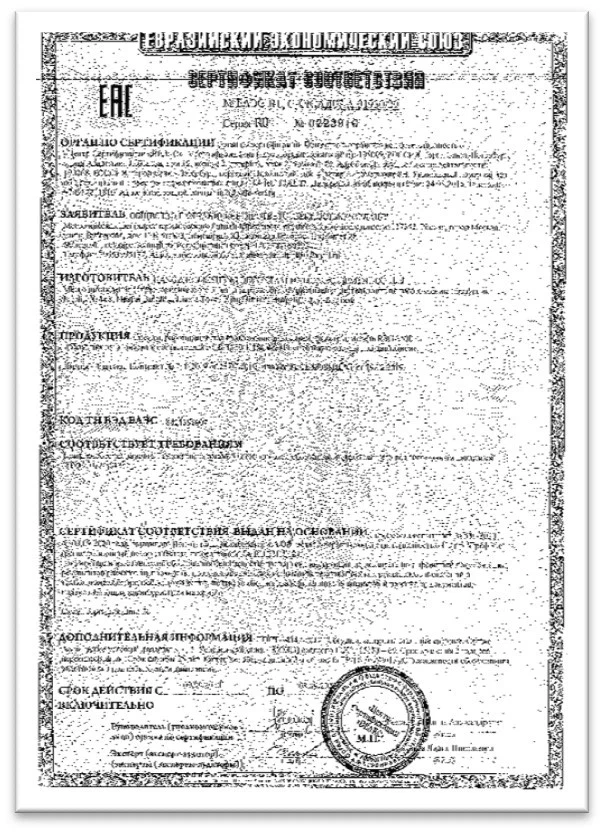
Vice President of Industry Association; ISO 9001 Quality System Accreditation both domestically and internationally; CE Certificate in the European Union; British AEA, and German TÜV.



FAQ


